
The Sword and the Keys
Canonical penances and indulgences

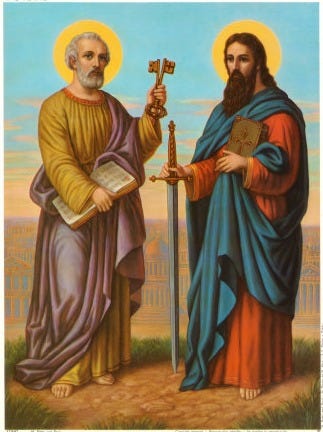
A few years ago I wrote an article entitled, “Excommunication: The Church’s Death Penalty.” Therein I highlighted how St. Paul’s description of “handing someone over to Satan,” i.e. excommunication, is explicitly tied to Deuteronomy’s ominous description of the death penalty: “Purge the evil person from your midst” (1 Cor 5:13 cf. Deut 13:9, 17:7, 19:19, 24:7). What this suggests is that excommunication is to the new Israel (the Church) what capital punishment was to ancient Israel. I’ve explored some of the implications of this before,1 but in this article I want to unpack the dual imagery that this connection presents: the sword and the keys.
I. The Sword
In Romans 13:1-7, St. Paul teaches that the civil authority “does not bear the sword in vain,” and that “he is the servant of God, an avenger who carries out God’s wrath on the evildoer.” If one were opposed to capital punishment, writing something like this about the first century Roman Empire would be utterly irresponsible. Indeed, since we have strong external evidence that suggests that Paul affirmed Rome’s authority to execute criminals (cf. Acts 25:11), the idea that he was opposed to the death penalty strikes me as silly and anachronistic. Clearly, Paul endorses capital punishment.
However, the legitimacy of capital punishment isn’t my concern here. Rather, it’s the fact that this image of “the sword” is being used to not only justify the state’s power to execute criminals (Rom 13:5), but all of its other powers as well: “For because of this you also pay taxes, for the authorities are ministers of God, attending to this very thing” (Rom 13:6). Because the civil authority wields the sword, “you also pay taxes.” This makes good sense. If the state has a “maximal power” such as presiding over the life and death of its citizens, it would be quite strange if the state didn’t likewise have “minimal powers” such as taxation.
The principle being expressed by St. Paul is essentially, qui potest plus, potest minus, “He who can do more, can do less.” If you have the highest power in a certain realm, in this case the civil realm, all lower powers are implied as well. He who has the power to wage (just) wars and execute murderers also has the power to imprison thieves, tax citizens, and so forth. This principle is key (pun intended) to understanding the relationship between the power of the sword and the power of the keys.
II. The Keys
The image of “the keys” and its connection to ecclesiastical power comes from two places in Sacred Scripture: Matthew 16:18-19 and Matthew 18:15-20. In the former text, our Lord declares St. Peter to be the rock of His Church, gives him “the keys of the kingdom of heaven,” and declares that whatsoever he “binds” with these keys shall be “bound in heaven,” and whatsoever he “looses” shall “loosed in heaven.”2 Although the latter text doesn’t explicitly mention the keys, it nonetheless invokes their power of “binding and loosing” and directly ties it to excommunication:
If he [an unrepentant sinner] refuses to listen even to the church, let him be to you as a Gentile and a tax collector. Truly, I say to you, whatever you bind on earth shall be bound in heaven, and whatever you loose on earth shall be loosed in heaven.
Matthew 18:17-18
Significantly, Matthew 16:18 and 18:17 are the only two places in the entire Bible where our Lord uses the word “church,” ekklesia. What they reveal is that the very Church that’s built upon the Apostle Peter, who alone possesses the keys of the kingdom, is the Church that has the authority to excommunicate sinners.
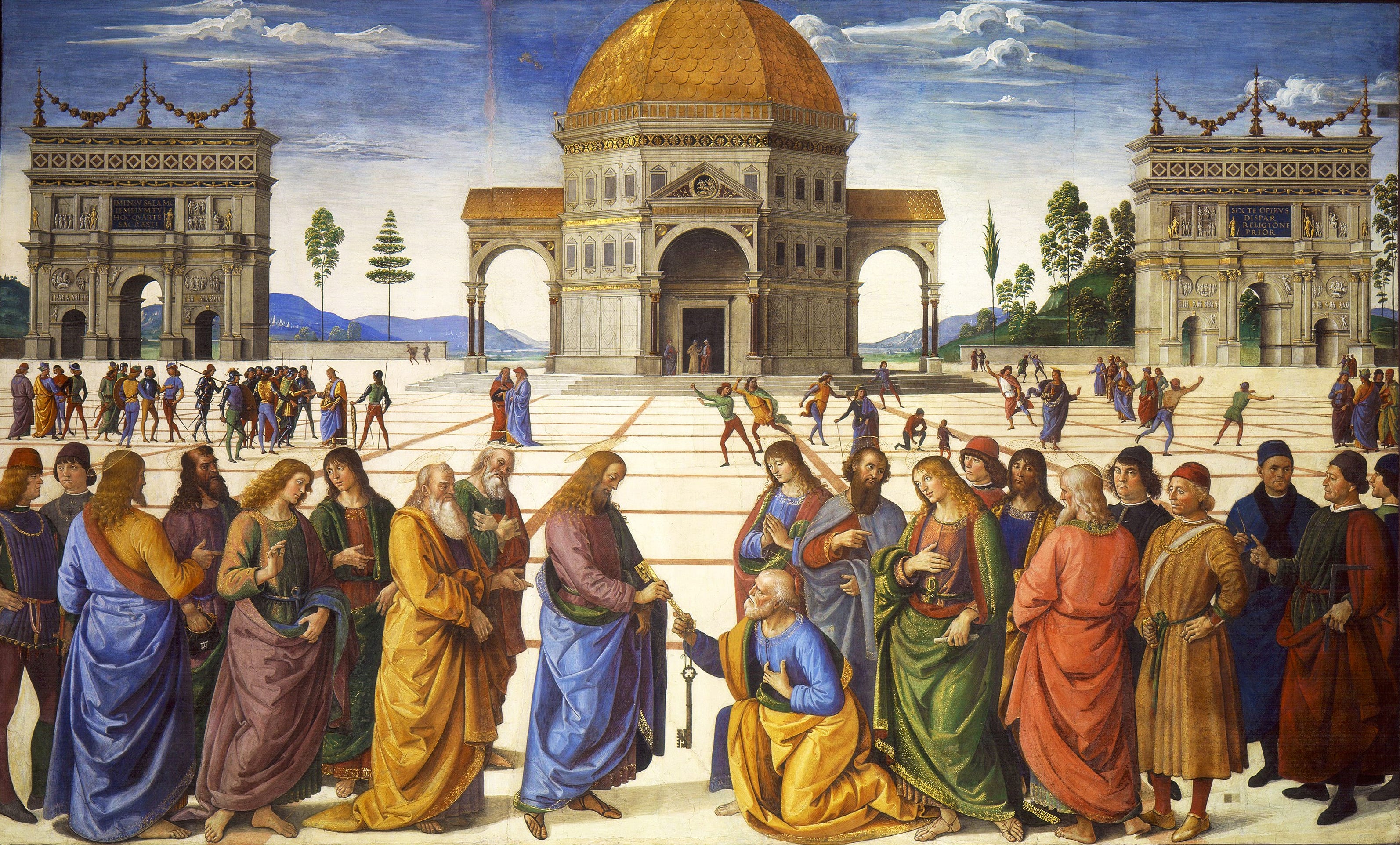
However, it’s clear that not everyone in the Church has the authority to excommunicate. In context, Matthew 18:15-18 directly contrasts “the church” with a mere group of believers. Since binding and loosing is tied to the authority of “the keys” in Matthew 16:18-19, it makes sense that only those with access to these keys (via Peter the key-bearer) possess the authority that comes with them. Yet there’s more to the keys than just the authority to excommunicate.
This is implied by the very description of the keys’ power: binding and loosing. Not only can the keys bind penalties such as excommunication, they can also loose penalties. Our Lord shed more light on this in John 20:23 when He declared to His apostles, “If you forgive the sins of any, they are forgiven them; if you withhold forgiveness from any, it is withheld.” Like Matthew 16:18 and 18:17, John 20:23 also shows the apostles being given the power to “bind” and “loose,” which it glosses as “retaining” and “forgiving” sins. Indeed, the earliest patristic discussions of Matthew 16:18 and John 20:23 were directly tied to controversies surrounding the Church’s authority to forgive post-baptismal mortal sins.3
There were early Christians, likely basing themselves on biblical texts such as Hebrews 6:4-6, who believed that there was no place in the Church for sinners to repent after Holy Baptism. Others believed that maybe you could repent once if you sinned after Baptism, but that was it.4 However, for fathers such as Ss. Ambrose of Milan, Augustine of Hippo, and John Chrysostom, such a belief obviously contradicted the authority of the priesthood to forgive sins via the power of the keys.5 This is the theological framework out of which the Catholic Church’s understanding of the sacrament of Penance would develop.
III. The Keys and Canonical Penances
Now we can circle back to the connection between the sword and the keys, specifically concerning the principle of qui potest plus, potest minus. Consider that new covenant priests6 have the authority to “maximally” bind or loose sins through either excommunicating sinners or remitting the eternal punishment due to their mortal sins. If priests have these “maximal” powers in the divine court, then it follows that they likewise have “minimal” powers in this same court.
Indeed, if a priest can bind someone to a penalty such as excommunication, why wouldn’t he likewise be able to bind lesser penalties? This, I would argue, is the logic underlying the Church’s belief that priests have the authority to issue canonical penances that truly bind those to whom they’re assigned.
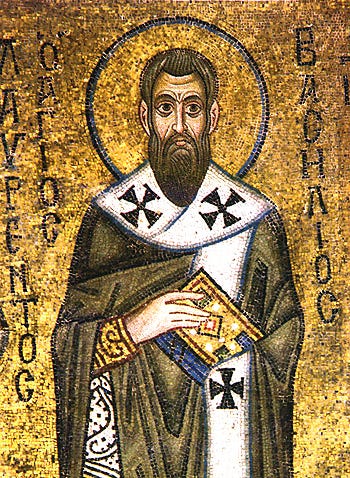
In the early Church, penances were almost always tied to excommunication. This is evident from texts such as the canons of St. Basil the Great (d. 379), where long periods of excommunication were assigned to penitents who sinned in various ways.7 Later Penitentials such as the canons of St. Theodore of Canterbury (d. 690) would further include long periods of prayer, fasting, and doing good works. As time went on, the Church deepened her understanding of the sacrament of Penance, which eventually impacted the way the sacrament itself was celebrated.
By the twelfth century, there was still much debate about how and when forgiveness was received in Confession. Canonists like Gratian held that forgiveness occurred at the priest’s absolution, while theologians like Peter Lombard interestingly held that it was received at the first moment of the penitent’s contrition.8 However, despite this disagreement, a growing consensus emerged about other aspects of Penance. Namely the fact that it was a sacrament, that it was truly necessary for those in mortal sin, and that it consisted of three elements: contrition, confession, and satisfaction.
Unsurprisingly, St. Thomas Aquinas beautifully synthesized the Catholic teaching on Penance during this same time period.9 He recognized, as the Church does today, that perfect contrition alone does indeed suffice for the remission of mortal sin. So why go through sacramental Penance at all? St. Thomas gives three reasons. First, you can’t actually know whether or not you have perfect contrition, and so Confession guarantees that you do since, if you didn’t, it would have been produced in you through the sacrament.10 Second, perfect contrition is always accompanied by a desire to confess one’s sins and do penance for them. Third, and this is most relevant to our discussion, one is bound to receive judgment from a priest about their sins so they can make proper satisfaction for them.
This third reason follows from the biblical texts we’ve been considering. The keys of the kingdom constitute the “ministry of reconciliation” (2 Cor 5:18) that’s been committed to the priests of the Church. They’re the ones that Christ has tasked with disciplining the people of God, “binding and loosing,” “forgiving and retaining” sins. As such, when Christians commit sins that merit discipline, then they must seek this discipline from the Church’s priests. Thankfully, excommunication isn’t the typical discipline that gets administered to penitents these days. Instead, because priests have the authority to issue maximal penances, over time they came to see that they can likewise substitute these with minimal penances when deemed proper. Priests also realized that these penances didn’t have to be fulfilled as a prerequisite for absolution, and so they began to require the penances to be done afterwards instead.
IV. The Keys and Indulgences
Just as the Church’s understanding of the keys’ power to “bind” canonical penances deepened throughout the centuries, so too did her understanding of the keys’ power to “loose” sins. Recall the principle of qui potest plus, potest minus. If new covenant priests have the authority to remit the eternal punishment due to mortal sin, then how much more should they have the authority to remit the temporal punishments due to sin? This is part of the logic that inspired the medieval Catholic Church to develop her teaching on indulgences. But before directly diving into this controversial topic, let’s first take a step back.
Only the infinitely meritorious sacrifice of Jesus Christ can remit the infinite (eternal) punishment due to mortal sin, this is true. However, the Church has always believed that our own godly merits and good works (which themselves are gifts from God) can remit the temporal punishment due to sin. This is indeed taught in Sacred Scripture, as I explain in a previous article:
As Gary Anderson has demonstrated in his book, Charity: The Place of the Poor in the Biblical Tradition, the fact that charity saves one from the punishment of sin was one of the defining features of the Old Testament’s teaching on the “heavenly treasury.” This is a concept that’s primarily derived from the wisdom literature, especially Proverbs 10:2, “Treasures gained by wickedness do not profit, but righteousness delivers from death,” and 19:17, “Whoever is merciful to the poor lends to the Lord, and he will repay him for his deed.” Importantly, these two proverbs were later tied together by Tobit 12:8-9, “It is better to give alms than to store up gold, for almsgiving saves from death, and purges all sin,” and Sirach 29:12, “Store up almsgiving in your treasury, and it will save you from every evil.” The consistent emphasis isn’t on our works meriting eternal life, but rather on our works delivering us from the temporal punishment due to sin, e.g. “death,” and “every evil.” I’d recommend reading Anderson’s book for a detailed defense of his thesis, but it’s essentially this: the New Testament follows this Old Testament teaching that, whereas sin incurs a “debt” that must be paid off, works of righteousness earn a “wage” that can pay down this debt.
As Nathan Eubank has shown in his dissertation, Wages of Righteousness: The Economy of Heaven in the Gospel According to Matthew, while the New Testament certainly does have an atonement theory wherein our Lord Jesus is the true heavenly “wage earner,” whose righteous sacrifice is able to pay the “ransom” price for those in slavery to sin (cf. Matt 20:28), Jesus’ call for His followers to earn heavenly wages is nonetheless genuine (Matt 6:19-21). In other words, the New Testament conceives of Jesus’ sacrifice as sufficient for meriting the total forgiveness of sins, yet it also affirms that our own deeds of righteousness earn a heavenly “wage” or “payment” (μισθὸς, Matt. 5:12, 6:1-2 cf. Rom 4:4) that can pay down the “debt” (ὀφειλήματα, Matt. 6:12 cf. 6:14) of sin. As Eubank puts it, “The Matthean Jesus both teaches his followers how to get out of debt and [also] earns their price of release for them, but the Gospel never addresses the question of why Jesus’ followers still have debt at all.”
Ben Bollinger (me), “Purgatory in Scripture and Tradition,” II. Righteous Deeds Remit Temporal Punishment.
This is why someone like St. Caesarius of Arles (A.D. 470-542) could teach the following without anyone in the ancient Church batting an eye:
Therefore, they [the faithful departed] may continuously be redeemed by constant prayer, frequent fasting, more abundant almsgiving, and the forgiveness of those who sin against us. Otherwise, perhaps when they are collected and form a great heap, they may bury us. Whatever remains of these sins and is not redeemed by us will have to be purged in that fire of which the Apostle said: ‘It is to be revealed in fire, and if his work burns he will lose his reward.’ […] if we neither give thanks to God in tribulations nor redeem our own sins by good works, we will have to stay in that fire of purgatory as long as those above-mentioned slight sins are consumed like wood and hay and straw.
St. Caesarius. Sermon 179, Sermons, Volume 2 (81–186). Translated by Mary Magdeleine Mueller, Catholic University of America Press, 1964, pp. 452-453.
The merits of faithful Christians (saints) are truly efficacious for remitting the temporal punishment due to sin, not only for themselves but also for others—in St. Caesarius’ case, for the faithful departed. The Catholic West eventually joined this belief to the concept of “the treasury of merits,” which is simply an image we use to conceive of all of the merits of the saints “combined” in a sense. It’s with this background that we may return to our discussion of indulgences.
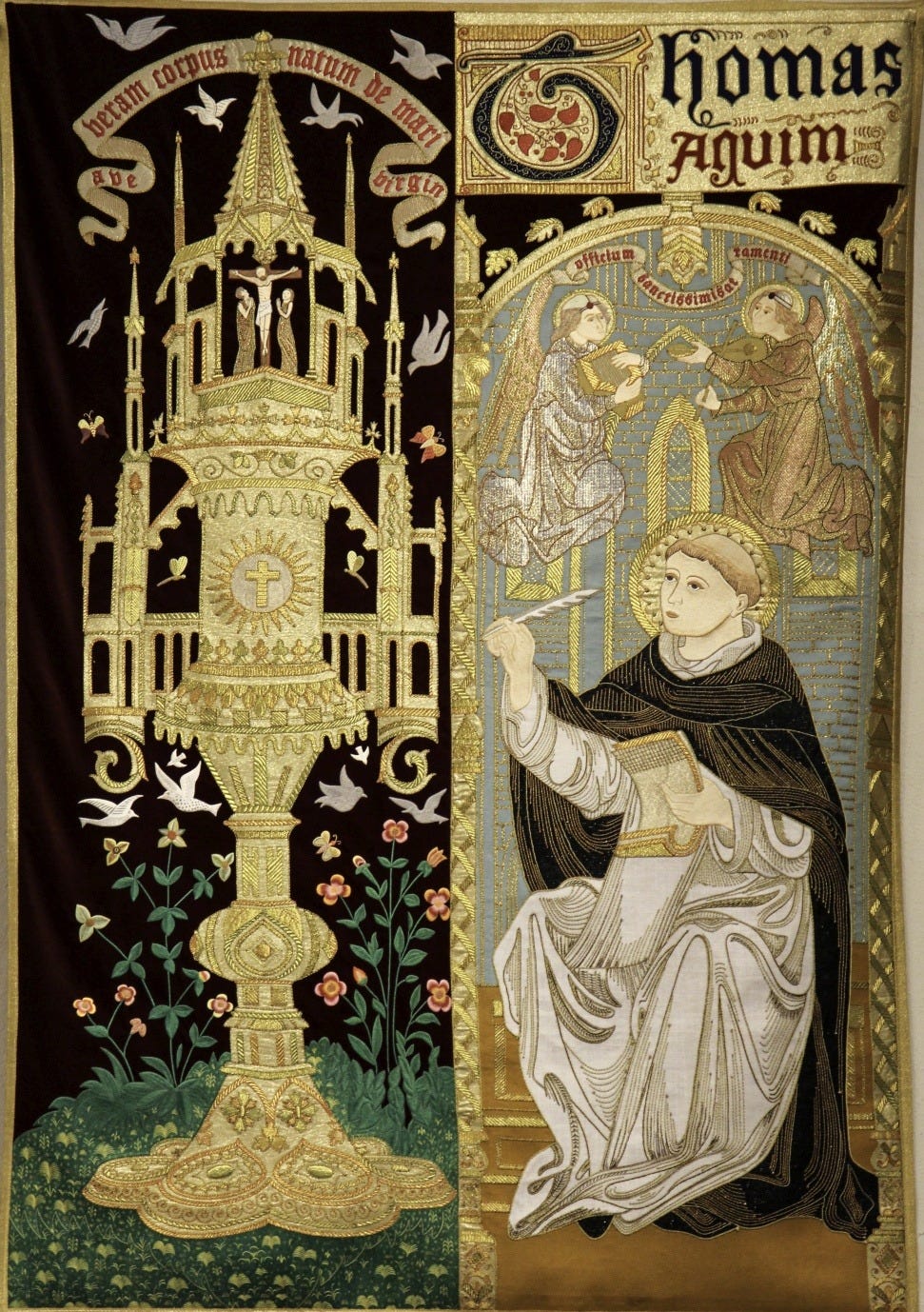
As St. Thomas Aquinas points out:
[T]he saints in whom this super-abundance of satisfactions is found, did not perform their good works for this or that particular person, who needs the remission of his punishment (else he would have received this remission without any indulgence at all), but they performed them for the whole Church in general, even as the Apostle declares that he fills up “those things that are wanting of the sufferings of Christ … for His body, which is the Church” to whom he wrote (Colossians 1:24). These merits, then, are the common property of the whole Church. Now those things which are the common property of a number are distributed to the various individuals according to the judgment of him who rules them all. Hence, just as one man would obtain the remission of his punishment if another were to satisfy for him, so would he too if another’s satisfactions be applied to him by one who has the power to do so.
St. Thomas Aquinas, Summa Theologiae, Supplement, Q. 25, A. 1.
The Church Militant have always believed that their own godly merits are efficacious for remitting temporal punishments, whether for themselves or for others. However, these merits don’t belong to themselves alone, but rather to the entire Body of Christ, as St. Paul makes clear in Colossians 1:24. From here the logic is quite straightforward. Since the keys of the Church give priests the authority to apply the infinite merits of Jesus Christ for the remission of eternal punishment, it makes sense that these same keys likewise have access to the merits of Christ and His saints for the sake of remitting temporal punishment. After all, qui potest plus, potest minus. Thus St. Thomas: “just as one man would obtain the remission of his punishment if another were to satisfy for him, so would he too if another’s satisfactions be applied to him by one who has the power to do so.” New covenant priests have the power to do so, and when they do, we call it an indulgence.
Throughout Church history, the “binding” power of the keys went from ordinarily issuing long periods of excommunication before sacramental absolution to issuing short periods of fasting and or prayer after absolution. This is a change that happened not only in the Catholic West, but the Orthodox East as well. It happened because the Church both increased her understanding of the sacrament of Penance and had the authority to enact disciplines in accordance with this deepened understanding. This is exactly what happened with indulgences, only this development occurred with respect to the “loosing” power of the keys rather than their “binding” power. The Church went from only loosing sins in the context of sacramental Confession to also using this power outside of Confession for the spiritual benefit of her people.
Final Remarks
I want to conclude this article by returning to the dual imagery that inspired its title: the keys and the sword (yes I swapped the order). It’s not lost on me that these two images have been associated with Ss. Peter and Paul respectively, the two apostles on whose blood the Church of Rome was founded. Obviously, I believe this is supremely fitting since its the bishop of Rome who alone possesses the keys of the kingdom in their fulness, which he uses as “the ecclesiastical sword” for the sake of the Bride of Christ.11 I hope that what I’ve written, while not exhaustive, at least provides a coherent framework for understanding how the Catholic Church came to adopt her teachings on the sacrament of Penance and indulgences. Thanks for reading.
See my article, “Why Follow the Current Pope of Rome?,” especially the final section.
I’ve discussed the full meaning of this passage in great detail elsewhere. See my articles, “St. Peter: The Rock of the Church,” and, “What Eastern Orthodox Apologists Miss About the Papacy.”
See my article, “The Myth of ‘Public Confession’ in the Early Church.”
This is most famously expressed in the second (arguably first) century document, The Shepherd of Hermas, Book II, Chapter 3. Hermas heard “some teachers maintain that there is no other repentance than that which takes place, when we descended into the water and received remission of our former sins.” The Shepherd responds, “That was sound doctrine which you heard; for that is really the case. For he who has received remission of his sins ought not to sin any more, but to live in purity.” However, the Shepherd goes on to qualify this, “the Lord, knowing the heart, and foreknowing all things, knew the weakness of men and the manifold wiles of the devil, that he would inflict some evil on the servants of God, and would act wickedly towards them… And therefore I say to you, that if any one is tempted by the devil, and sins after that great and holy calling in which the Lord has called His people to everlasting life, he has opportunity to repent but once.”
As bizarre as this sounds today, there were many early Christians who believed that The Shepherd of Hermas was divinely inspired. Among them is St. Irenaeus of Lyon, who quotes The Shepherd as Scripture (see Against Heresies, Book IV, Chapter 20.2). The Shepherd even made its way into the Muratorian Fragment, the earliest “list” of canonical Scripture that we possess. The Church historian Eusebius commented: “[some say that The Shepherd] cannot be placed among the acknowledged books; while by others it is considered quite indispensable, especially to those who need instruction in the elements of the faith. Hence, as we know, it has been publicly read in churches, and I have found that some of the most ancient writers used it” (Church History, Book III, Chapter 3.6).
While this doesn’t necessarily mean that all Christians who accepted The Shepherd as Scripture likewise accepted its teaching that there is only one repentance after Baptism, it’s hard to avoid that conclusion. This is especially so because we stop seeing The Shepherd counted as Scripture around the same time that debates about the Church’s penitential system are coming to a close (ca. A.D. 300s-400s).
Once again, see my article, “The Myth of ‘Public Confession’ in the Early Church.”
I’m just using the word “priest” here, but “new covenant priest” refers principally to the bishop. To this day, the Catholic Church teaches that priests can only absolve sins in Confession through the authority of their bishop. I would imagine something similar is true about excommunication.
This excommunication itself entailed other penitential practices as well. For example: “The unintentional homicide will be excluded for ten years from the sacrament. The ten years will be arranged as follows: For two years he will weep, for three years he will continue among the hearers; for four he will be a kneeler; and for one he will only stand. Then he will be admitted to the holy rites.” (St. Basil the Great, Letter 217, LVII).
See Lucas Briola’s fascinating article, “A Case Study of Scholasticism: Peter Abelard and Peter Lombard on Penance.”
See St. Thomas Aquinas, Summa Theologiae, III, Q. 84, “The Sacrament of Penance.” Also see his Supplement to the Third Part of the Summa, “Penance.”
For more on this, see Fr. Peter Totleben, O.P., “The Sacrament of Penance,” pp. 10-13.
For more on this see my article, “What Eastern Orthodox Apologists Miss About the Papacy.”
If you would be so kind, give my videos on the papacy and 1st Clement a browse. Your interview with Joshua Charles reminded me of my papacy video responding to Sean Luke of Anglican Aesthetics: https://youtu.be/gVV9XyMPSIY (you will find many correspondences with your own thoughts/sources and those of Erick Ybarra)
I'd also be interested in your take on my take on 1st Clement: https://youtu.be/vOhoVjLuuCc
As always. Very succinct article.
Have a blessed Christmas. 🙏